
Shedia Nelson and the Power of Refusing Silence

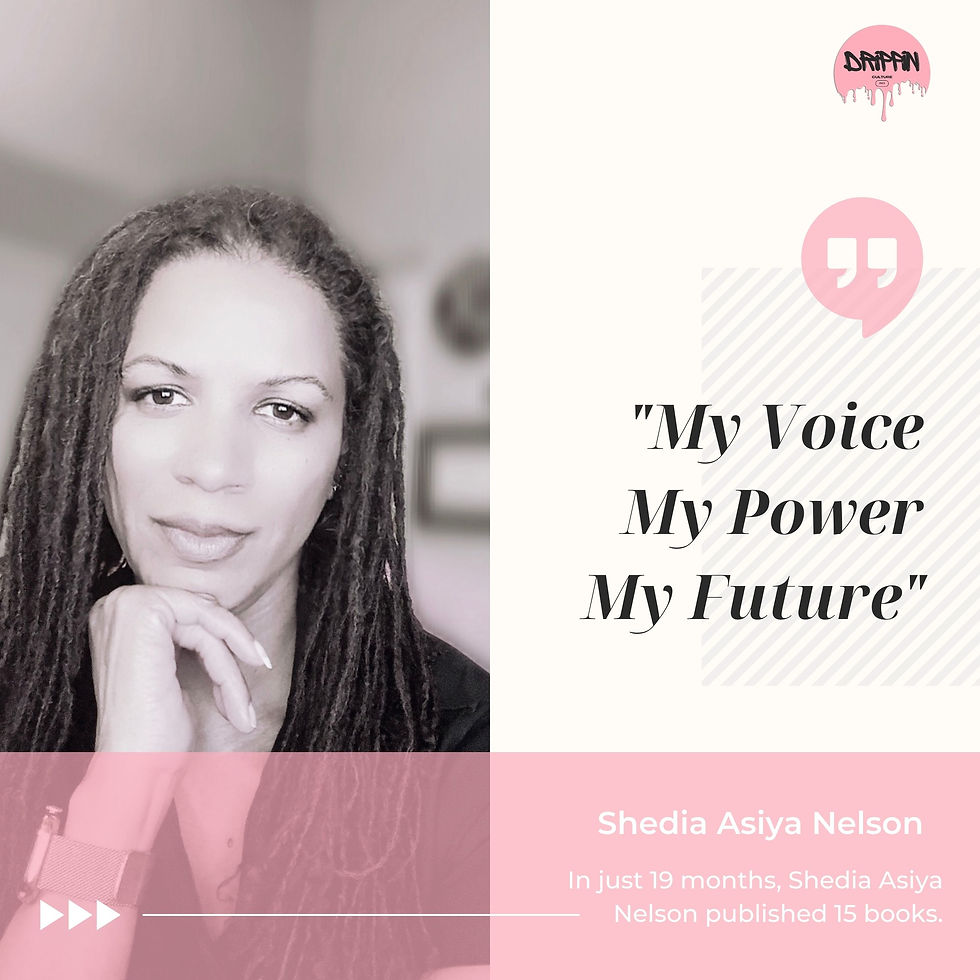
How Shedia Nelson Uses Her Voice to Uplift Youth Community and Culture
Some people enter your life and you immediately understand that what they carry is intentional. Shedia Nelson is one of those people.
I know Shedia personally through our work with the nonprofit URGENT Inc., and from the first conversation, it’s clear she comes from a lineage of powerful, dynamic people. That presence shows up instantly. She knows how to use her voice in a way that commands attention without demanding it. She listens just as deeply as she speaks. And when she speaks, it lands.
She is kind. She is caring. She is brilliant. And she understands something many people never fully grasp — that voice is not just sound. It is responsibility.
Shedia is also an incredible dancer, and that matters more than people realize. The same storytelling that lives in her writing and speaking lives in her movement. She communicates with her entire body. Whether she’s on stage, in a classroom, or mentoring youth, she brings her whole self into the space. That authenticity is why young people trust her and why her work resonates far beyond the page.
From her plays to her books to her curriculum to her mentorship, everything she does is rooted in uplift. Youth. Community. Culture. Always.
Shedia Nelson and Writing Through Life Not Around It
In just 19 months, Shedia Nelson published 15 books. That number alone is impressive, but the real story is what lived behind those pages long before publication.
For years, her writing existed quietly. In notebooks. In computer folders labeled “One Day.” Written late at night after her kids fell asleep. Created not for validation, but for survival. Poetry became a place to reflect, regroup, and breathe when life felt overwhelming.
Her book Here I Am reflects that journey honestly. It doesn’t perform healing. It documents it. Each piece reads like a lived moment rather than a polished idea
A young girl learning to trust her voice
A leader shaped by books passed down in love
A poet honoring her own rhythm
A mother writing through grief growth and becoming
Shedia does not write around discomfort. She writes straight through it. That willingness to be honest is what makes her work feel so human and so necessary.
Shedia Nelson and Why Using Your Voice Matters Now More Than Ever
Shedia Nelson’s journey as a writer includes a moment that could have easily silenced everything.
In high school, an essay she poured her heart into came back covered in red ink. The criticism cut so deeply that she went home and told her mother she no longer wanted to be a writer. That moment matters because it reflects how fragile creativity can be when it’s first forming. Especially for young people who are still learning how to protect their gifts.
What followed changed the course of her life.
Her mother stepped in and spoke with the teacher, who later apologized and offered constructive feedback. Shedia revised the essay, written about Langston Hughes, and earned a B+. But more important than the grade was the final note written by the teacher.
“I hear your voice in this writing. This is the best piece in your portfolio. Keep going.”
She did.
That moment feels even more important today.
We are living in a time where voices are being restricted in new and subtle ways. Words are being banned from classrooms. Social media platforms quietly shadow ban creators. Algorithms decide who gets seen and who gets buried. People are punished not always for being wrong, but for being honest. For naming their experiences. For speaking from a place of truth.
That makes stories like Shedia’s critical.
When young people see how easily a voice can be dismissed, censored, or discouraged, it teaches them to shrink. To self edit. To stay quiet. Shedia’s work pushes against that. Her life is proof that voice must be protected early and exercised often. Because once silence becomes habit, it’s harder to unlearn.
Shedia teaches youth that their voices matter even when they’re uncomfortable. Even when they challenge systems. Even when they don’t fit neatly into what’s acceptable or marketable. Especially then.
Shedia Nelson Building Healing Through Art and Education
Through her work with URGENT Inc., Shedia merges creativity and education in a way that is deeply intentional. Her curriculum My Voice My Power My Future is used in schools, summer camps, and after school programs to help young people explore identity leadership and purpose through trauma informed arts based learning.
Her three part play She Kept Her Bra On Chronicles of a Teenage Love Affair addresses teen dating violence self esteem consent and social media pressure with honesty and care. The companion toolkit creates space for reflection journaling and dialogue without shame.
Her children’s books including Lil Squirrel, Read With Me from A to Z, and Love Sprinkles extend that same mission into early literacy creativity and cultural affirmation. Lil Squirrel, which she wrote and illustrated, is available in English Spanish and Haitian Creole ensuring more children see themselves reflected in the stories they read.
None of this work exists by accident. It is all built with intention.
Shedia Nelson and a Legacy Rooted in Uplift
Shedia Nelson has presented at the Little Haiti Book Festival, Florida Memorial University Book and Arts Festival, Co Space Black Book Fairs, and Art Prevails Project’s Festival of Words. Her work has been featured by CBS 4 Miami, WLRN, VoyageMIA, Shoutout Miami, and NBC 6.
Still, the most meaningful moments happen when youth engage with her work and say, “Miss, how did you know? You’re talking about me.”
That is the impact.
Shedia’s words were never meant to stay in notebooks or folders marked “One Day.” They were meant to travel. To reach people questioning their worth. To remind others that silence is not safety. And to show what happens when someone refuses to let red ink, algorithms, or fear erase their voice.


What Happens When You Refuse to Be Erased?
“They tried red ink. I chose bold.”
Unapologetic voice.
When someone refuses to let fear, edits, or systems erase them—others find courage too.
Drop 🔥 if you’re choosing bold.
Be seen.
Tag a friend, educator, teacher, school, organization who needs my books.
Let’s talk, laugh and share!